


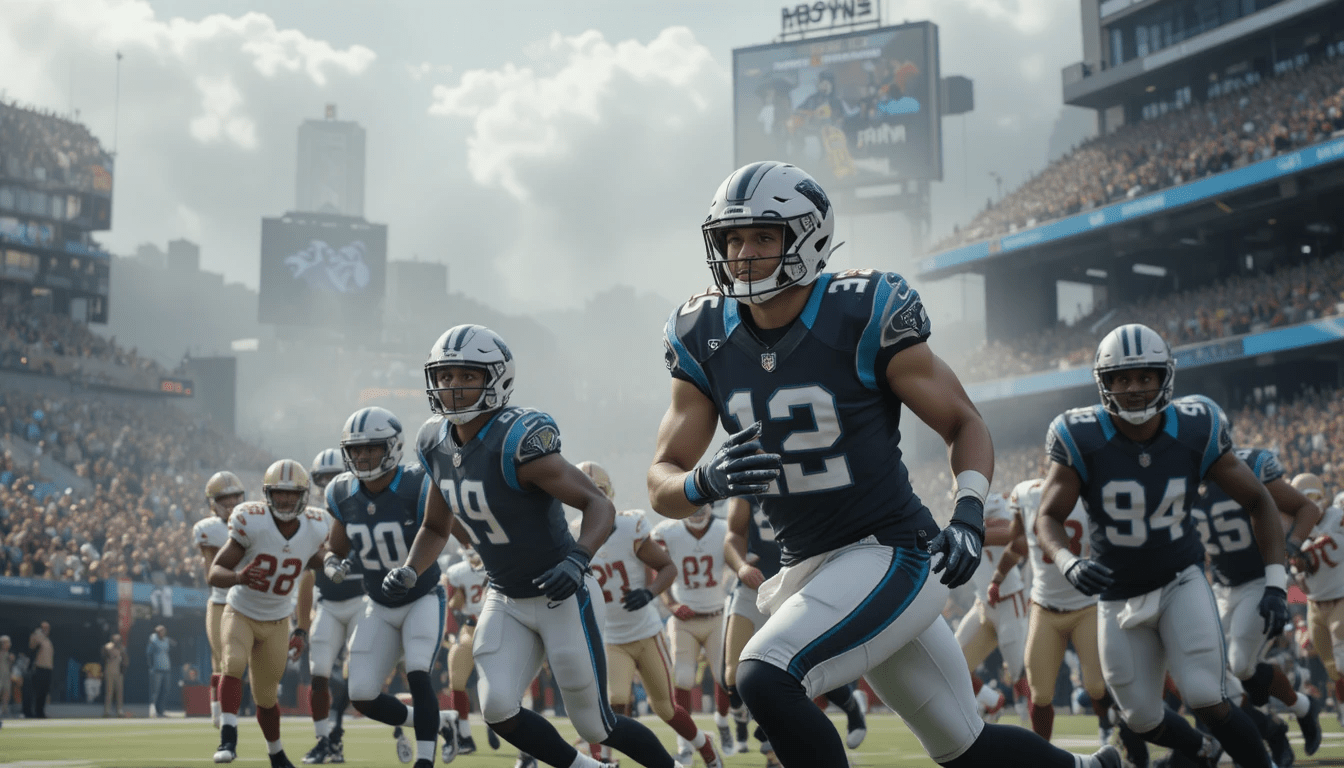
In the NFL, box scores tell a story far deeper than the final point differential. When the Carolina Panthers clash with the San Francisco 49ers, the game is rarely just about athleticism; it is a collision of schematic philosophies.
The most recent significant meeting between these two franchises (the 2022 Week 5 matchup) serves as the primary case study for how these rosters stack up. That game, a 37-15 victory for San Francisco, offered a masterclass in defensive efficiency and offensive game management.
Below is a complete breakdown of the player stats that defined the game, analyzing the key performers who shifted the momentum.
Quarterback Comparison: Efficiency vs. Volume
The disparity in quarterback play was the defining statistical gap in this matchup. While the passing yardage totals were relatively close, the efficiency metrics painted a starkly different picture.
Jimmy Garoppolo (SF)
- Passing: 18/30 (60%)
- Yards: 253
- Touchdowns: 2
- Interceptions: 0
- Rating: 109.4
The Stat Line Context: Garoppolo’s stats reflect the classic 49ers offensive system. He didn’t need to force the ball downfield. Instead, he relied on Yards After Catch (YAC). His average yards per attempt sat at a healthy 8.4, driven largely by hitting receivers in stride on crossing routes against the Panthers’ zone coverage.
Baker Mayfield (CAR)
- Passing: 20/36 (55%)
- Yards: 215
- Touchdowns: 0
- Interceptions: 1
- Sacks Taken: 4
The Stat Line Context: The stats highlight the Panthers’ inability to protect the pocket. Mayfield’s completion percentage suffered under duress, and the interception—a pick-six by Emmanuel Moseley—was a direct result of being forced to throw off his back foot. The zero touchdowns indicate a “red zone efficiency” failure, as Carolina struggled to finish drives.
The Ground Game: Rushing Stat Leaders
This matchup featured a fascinating narrative twist: it was one of the final games Christian McCaffrey played against the team he would soon join.
San Francisco 49ers Rushing Stats
- Jeff Wilson Jr.: 17 carries, 120 yards, 1 TD (7.1 Avg)
- Tevin Coleman: 8 carries, 23 yards, 1 TD
Analysis: The standout stat here is Jeff Wilson Jr.’s 7.1 yards per carry. This number is indicative of the 49ers’ offensive line dominating the line of scrimmage. They consistently reached the second level of the Panthers’ defense, allowing Wilson to gain chunk yardage before being touched.
Carolina Panthers Rushing Stats
- Christian McCaffrey: 14 carries, 54 yards, 1 TD (3.9 Avg)
- D.J. Moore: 2 carries, 10 yards
Analysis: McCaffrey’s 3.9 average is a testament to the 49ers’ linebacker speed. Fred Warner and Dre Greenlaw effectively removed the edge, forcing McCaffrey inside where the interior defensive line was waiting. While he managed a touchdown, his impact was neutralized compared to his historical averages.
Receiving Corps: Key Targets and Yards
The receiving stats illuminate how each team distributed the ball. San Francisco spread the wealth, while Carolina struggled to find a consistent rhythm with their WR1.
- Brandon Aiyuk (SF): 3 receptions, 58 yards. Aiyuk served as the deep threat, stretching the field to open up underneath routes.
- George Kittle (SF): 5 receptions, 47 yards. Kittle’s stats don’t show his blocking dominance, but 5 catches prove he was the safety valve when plays broke down.
- Shi Smith (CAR): 4 receptions, 69 yards. A surprise statistical leader for Carolina, Smith found soft spots in the coverage when the 49ers focused heavily on stopping D.J. Moore.
- D.J. Moore (CAR): 4 receptions, 59 yards. For a primary receiver, these numbers were underwhelming, largely due to the relentless pressure on the quarterback.
Defensive MVP Stats: The Game Wreckers
Offense sells tickets, but the defensive stats explain the lopsided score. The 49ers’ pass rush generated numbers that made sustained offense impossible for Carolina.
San Francisco Defense
- Charvarius Ward: 10 Total Tackles, 3 Passes Defended. Ward effectively erased his side of the field, forcing throws elsewhere.
- Talanoa Hufanga: 1 Sack, 1 Interception. Hufanga filled the stat sheet, playing a hybrid safety role that confused the Panthers’ blocking assignments.
- Nick Bosa: 1 Sack, 4 QB Hits. The “4 QB Hits” is the critical metric. Even when he didn’t get the sack, Bosa moved the quarterback off his spot, ruining the timing of the play.
Carolina Defense
- Brian Burns: 1 Sack, 2 Tackles for Loss. Burns was the lone bright spot on the defensive stat sheet for Carolina, showing he could win 1-on-1 matchups even when the rest of the unit struggled.
Statistical Takeaways
When reviewing the complete player stats for Panthers vs. 49ers, two trends emerge:
- Possession Dominance: San Francisco controlled the clock by rushing for over 150 total yards.
- Turnover Margin: The disparity in interceptions and sacks (4 sacks by SF vs. 2 by CAR) tilted the field position battle heavily in San Francisco’s favor.
For fans and analysts looking ahead to future matchups, the key metric to watch is the Yards Per Attempt (YPA). As long as the 49ers maintain a high YPA through their zone-run scheme, the Panthers’ defense faces a steep statistical hill to climb.
